Episode Transcript
[00:00:00] Speaker A: Hi, I'm Dr. Jesse henson, and I'm inviting you to join me on lead with heart.
We explore how the mind, body, relationships and culture contribute to transformative leadership.
This is Lead with Heart on NOW Media Television.
Hello and welcome to Lead with Heart.
[00:00:31] Speaker B: Where we explore what it truly means.
[00:00:32] Speaker A: To lead from authenticity, presence, and purpose. I'm your host, Dr. Jesse Hanson, and today's conversation is about wholeness, how it forms, how it gets lost, and how it's reclaimed. I'm so honored to be joined today.
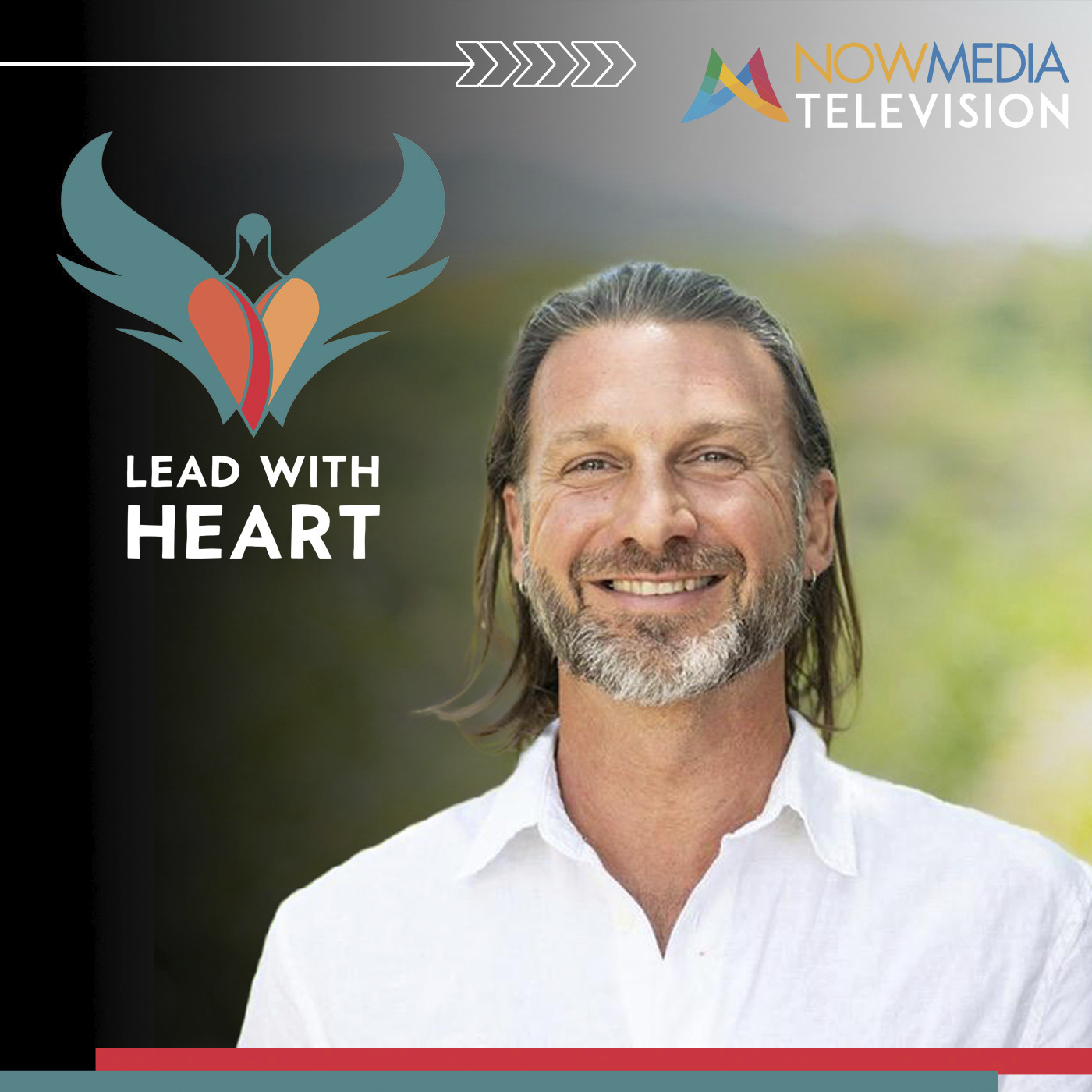
[00:00:47] Speaker B: By Ian Michael Hebert, the founder of Holos Global and a visionary leader working.
[00:00:53] Speaker A: At the intersection of ecological stewardship, wellness, and human development. With a background in architecture, sustainable development, and counseling psychology, Ian Michael has spent his life expanding how people, systems and nature connect. From leading renewal projects at the Esalen Institute in California to building regenerative wellness.
[00:01:15] Speaker B: Experiences around the world.
[00:01:17] Speaker A: His work is rooted in deep listening and integration.
[00:01:21] Speaker B: So today we begin at the beginning, and Ian Michael, I'm so happy to have you here. Honored. I also acknowledge and recognize that we are also neighbors. So I just want to acknowledge the blessings and beauty of living here in Costa Rica and for our viewers to know that Ian Michael is the founder and leader of Holos Global, which ironically means wholeness. Holos.
And so as we kick off today, this is a chance today to get to know you better and get to better understand what wisdom you're walking with.
So, as we said here, take us back into your past. Take us back into what has formed you to be you. Take us back into understanding how you got so interested in regenerative wellness, healing, the beautiful blend of architecture in there.
Tell us about your journey of it.
[00:02:13] Speaker C: Thank you, Jesse.
I am so grateful that we're neighbors and for all that you've done to support Holos over the years and so excited for the life that you're building here across the river.
This creation of what we've done at Holos here in Costa Rica has been a lifelong dream that started in my roots in Alaska. And I was the son of a home builder and a homemaker in the middle of Alaska in the Golden Heart, which is Fairbanks. And it's a town very close to the Arctic Circle. And so I think a lot of my psyche and my experiences in life that were formative were based on the environment that I grew up in, which was very extreme. You know, at this time of year, right around the winter solstice, there's about an hour and a half or two hours of sunlight. So just like a bit little, a little bit on the horizon. And then in the summer, we have two months of sun where it doesn't get dark. And so I think that the extremes really formed the way that I look at life, the way that I look at wholeness, and also my desire to build a regenerative culture where we take care of the basic things that humanity needs, food, water, shelter, and do those in a way that are life affirming.
When you're in an environment that is so extreme and stark and you're faced with the presence of the void or death at all times, especially during the winter when it's 60 below zero and dark, you learn the tools of resilience, both psychologically, but also what are the things that we need as humanity to be functioning well.
So when I was 17, I decided to become a vegetarian. And Alaska is not the best place to live sustainably as a vegetarian. So I had this dream to move.
[00:04:05] Speaker B: To Costa Rica as young as 17.
[00:04:07] Speaker C: Yeah.
[00:04:07] Speaker B: Wow.
[00:04:08] Speaker C: And so that took me on a wild journey. I hitchhiked from Alaska to Mexico when I was 18.
A friend of mine and I bought a van, he had been using drugs and drinking and rolled the van that we were going to take to Mexico and Central America. He passed away, turned into an eagle. And my other friend and I decided, okay, we're going to honor this young man's life, Cole, by hitchhiking and continuing this journey. So I hitchhiked from Alaska to Mexico when I was 18 to honor his life and also to honor this dream of living in Central America. Wow. And that's where a whole nother chapter began, which ultimately led here.
[00:04:52] Speaker B: Wow.
First of all, man, thank you. Wow.
[00:04:55] Speaker C: Yeah.
[00:04:55] Speaker B: I mean, I don't get to meet many people from Alaska and especially not in Costa Rica. And that's such a stark difference. I also loved in there, you were saying of, you know, being grown up in the extremes and seeing the power of sunlight and sustainability and the power of not having it and realizing, like, what do we need to survive as humans? And say it almost like gave you this connection from a young age of being connected to more primal instincts inside of us as well as sort of a bare bones appreciation of life, which I admit I see it all the time. I used to work at Passages Malibu. You know, people that have so much and are born into that, even just, you know, not even a ton of money necessarily, but even just the notion of expecting food to always be there and expecting the days to flow with the light and everything.
So I appreciate that helps me also better understand a core Part of you, you know, and then, wow, so powerful about your friend and the passing of him and how you continue to just move through that already at a young age. You know, I wonder if you're open to sharing what else in terms of what happened to. You know, as a psychologist, I can't help but go there with the inner child in our younger.
Just wondering too, anything you're open to share about what happened in the dynamics of your family of origin that helped to shape you or guide you towards all of this kind of life you live now?
[00:06:19] Speaker C: Yeah, there's so many dimensions that I could go into because, as you know, I also have a master's in counseling psychology. So I have all of those frameworks. And then I've worked a lot with plant medicine and that's given me access to going back into my childhood and to all the nuances of what we may call trauma, but of patterning that were created from my childhood. And I've had the opportunity in my adult life to unravel those and start to re pattern some of that. But I would say that there was two primary things. One, from a very young age, I felt very connected to the natural world. So we had a beautiful birch forest in my family home until about age 10. And I developed this relationship with the ecology there and the moose and the squirrels and the rabbits and the birch trees particularly, that actually ended up saving my life.
I felt this really like, connected, empathic life to all of nature.
And then I also had a childhood with parents that were doing a great job, but also were.
Had their own humanness. They're humans and all of their ancestral trauma and the things that they came with. And so I had the experience of nature being this beautiful ally. And then I had this home environment that was fairly chaotic. And eventually my parents separated when I was nine and I had a new constellation of a family when I was 10, with my stepmom and stepbrother and stepsister in my dad's house.
[00:07:55] Speaker B: And.
[00:07:56] Speaker C: And I hit a really big low when I was 11 and I attempted suicide. And I had a little tree fort that I had built and I hung myself from the tree. And as I was hanging there, I tuned in to what was happening and that I was taking my life. And the birch trees brought their light into my body and were like, hey, this is not your time to go. And so I went and grabbed onto the birch tree that was next to me and pulled myself up and, you know, continued on with my life and began this healing journey that originally started with Counseling and, you know, Western pharmacology and being medicated and all of these things, but ultimately led into a healing journey that took me within and finding my relationship to the divine. And so, you know, there's been many layers since then, of course, unraveling what was so painful in my childhood that I wanted to take my own life at that young age. Yeah, yeah, yeah.
[00:08:57] Speaker B: I feel a little leaking happening just thinking about that from a young ian Michael at 11, being that. That much pain that that happened. And yet also, obviously, the magic and the beauty you describe of understanding the connection between all things and the birch trees, in this case, as the messengers of.
Hey, it's not your time yet. So, wow, thank you so much for your vulnerability.
That's a consistent theme we're working with and playing with, is vulnerability is actually a superpower. And we're going to continue as we go through this experience to learn more about who you are and who you're becoming. And that, to me, is also just magical. Ian Michael, to find the lotus, to find the fertilizer out of the crop. And it sounds like you started that very young.
And also just the pain of. Yeah. What it would have been like to have already, at that young of an age, been ready to go.
That's a tough one, man. That's a tough one.
It also helps me better understand why it was, you know, besides the vegetarian option and realizing there wasn't a lot of growing season up there.
But, yeah. Where it would be. You would already have had the courage and faith and autonomy to be ready to leave your home, you know, at that age. So.
Wow. Wow. Quite. Quite a journey, man. Quite a journey.
[00:10:18] Speaker C: Yeah.
[00:10:20] Speaker B: Last quick thing here before we take our first break. Ian Michael is just wondering if you could just speak to, you know, how that balance played of feeling the safety or connection with nature when your home life didn't feel so safe.
Yeah. Just speak a little more to that of, like, how that's served you and through the young years, but even maybe today.
[00:10:40] Speaker C: Absolutely. Yeah. I think that nature and Gaia has always been a place that I can find refuge and a sense of connection and beauty that, you know, in moments that are challenging. It's like this incredible valley that we live in, the Diamante Valley in Costa Rica.
It really was the holding environment for me during the pandemic. So, you know, the world. World was experiencing all of this contraction and challenges and people being locked down, and I just developed this tantric relationship with the river here and came to know the waterfalls as my lover. And really went deep with nature here and listening and listening to all the signs and symbols that were dropped on the paths that I walked. And so I think that that's currently what really supports me. But I still have a connection to many different land landscapes around the world that I go for solace.
And whenever I need a reset where the human world and work world become overwhelming or just the responsibilities of life, then I seek that solace in the mountains or the rivers or. Yeah.
[00:11:53] Speaker B: Wow. So beautiful to hear. Like, especially I think it's here for any of us, but especially when we've had challenging, traumatizing childhood stories and experiences. The power of connecting to nature as almost, you know, a deeper sense of home.
So I appreciate you walking with that so much. And we're gonna have to take a short break now, but when we get back, we're gonna dive deeper into better understanding. Ian Michael's been so open and vulnerable already of challenging beginnings, and I'm excited for you guys to listen and understand more of who he is today and who he's becoming. So stay tuned here on Lead With Heart on NOW Media tv.
[00:12:32] Speaker A: We'll be right back with more insights, stories and practices to help you lead from your whole self. This is Lead with Heart on Now Media Television.
Hi, I'm Dr. Jesse Hanson, and I'm inviting you to join me on Lead With Heart, a weekly show on NOW Media Television focused on awakening a new kind of leadership, one rooted in embodiment awareness and and human connection.
Every episode of Lead with Heart goes beyond corporate models and surface metrics. We explore how the mind, body, relationships and culture contribute to transformative leadership. If you're a leader, healer, entrepreneur, or innovator who brings a story of personal evolution, team impact, or leadership beyond the status quo, I'd love to feature you as a contributor.
Lead With Heart airs on NOW Media Television Networks, the first bilingual medial network in the US and it's also available on Roku TV, Apple TV, iHeartRadio, Sirius XM, and all major podcast platforms.
And we're back. I'm Dr. Jesse Hansen, and you're watching Lead with Heart on Now Media Television. Let's continue embracing leadership with presence and purpose.
Welcome back to Lead with Heart. Want more of what you're watching? Stay connected to Lead With Heart and every NOW Media TV favorite live or.
[00:14:05] Speaker B: On demand anytime you like.
[00:14:07] Speaker A: Download the free Now Media TV app on Roku or iOS and unlock nonstop bilingual programming in English and Spanish on the move. You can also catch the podcast version.
[00:14:18] Speaker B: Right from our website at www.nowmedia tv.
From business and news to lifestyle, culture.
[00:14:25] Speaker A: And beyond, now media TV is streaming around the clock.
[00:14:29] Speaker B: Ready when you are.
[00:14:32] Speaker A: Welcome back to Lead with Heart. I'm your host, Dr. Jesse Hanson. And today I'm honored to be here.
[00:14:38] Speaker B: With Ian Michael Hebert. Welcome back.
Wow. You opened my heart right away on that first segment by just being so vulnerable and owning that. And I know from my own personal healing and all the people I've held space for, the only way you can do that and sit here with the same poise and presence that you can is because you've done a lot of work on yourself over the years to help make peace with those tough beginnings.
So this segment I want to go deeper into helping our viewers understand who you are now.
Anything you want to continue with where you left off, kind of the Mexico piece, but to help bring us forward to who you are now and what you're creating, how you're living.
[00:15:25] Speaker C: Yeah. Thank you. And thanks for bringing it back.
So as I shared, I hitchhiked from Alaska to Mexico when I was 18 and I met a man who owned a vegetarian restaurant in Puerto Vallarta. And he said, you should go to this town, Yelapa, and hike up into the mountains and see the waterfalls. So I took a boat to this little town. It didn't have electricity at the time. It was like over 20 years ago. And hiked up into the mountains and found these waterfalls. And I found one waterfall that was just big enough where you could sit behind it. And there was a chamber for like, just the right amount of space for a human body. So I sat there and I started toning. I started making a sound with my voice and I found that I could get the tone to start reflecting off of the water droplets.
And so I created this sound chamber that was very alive and dynamic. And as I kept toning, there was something that happened where the vibrations were constructive, where they started like stacking on top of each other. And this chamber started to resonate very strongly.
[00:16:29] Speaker B: And this is still an 18 or 19 year old you. You're already this aware?
[00:16:33] Speaker C: Yeah. I was practicing sound healing and was into all of these esoteric things and meditation. And the sound dissolved my body to the point where I was just pure consciousness. And the sun was coming through and I became the sun. And then I felt how the sun trickles down into creation, into every atom and proton, and the whole of creation is filled with these little light particles and that it's actually all one. And I emerged out of the waterfall at some point and reconstituted into a human body.
And it was a very powerful unitive experience. And so there was something with the intelligence of water where I developed this very deep relationship to communing with the water. And that's ultimately what, you know, 20 years later, led me to this incredible valley that we share with some amazing.
[00:17:24] Speaker B: Neighbors where we live between the tallest and strongest waterfalls in Costa Rica.
[00:17:28] Speaker C: Right.
[00:17:29] Speaker B: The power of the water here is undeniable.
[00:17:30] Speaker C: The water is so, yeah, potent and this portal that is the Diamante river has taught me so much. And so I think that that's one of the golden threads that connects my early life of exploration and seeking spiritual insight into this moment. And, you know, I think that everyone who is a contributing member to this valley, but also to holos, really feel that they feel the draw of this 600 foot waterfall in the distance and the way it comes through the valley and that we can play there and commune there. And so I think that that's a big piece that drives me right now is how do we tend to our watersheds? How do we think about these hydrological cycles that are changing? There was just a big flooding event in Washington State and British Columbia that was very destructive. And so as climates change, you know, it's like, how are we tuning to the water? And this brings me back to like ancient shamanic practices where they were possibly even orchestrating the weather, you know, through their consciousness. But at very least they were very attuned to the ecosphere. And so that's a big part of my life and mission now is building places that help people to tune back into the ecosphere through a sense of awe, through a sense of home. You know, you have this amazing home tucked down there near the river and you have this deep relationship that is bringing nature to animals. Exactly. So you understand that?
[00:19:05] Speaker B: No? I love you. Building the bridges of the more energetic, spiritual, esoteric. And I also just want to highlight, because you are so humble, for our viewers that don't know, maybe these names Esalen and holos and CIIs and San Francisco. Ian Michael's also very well studied in the same as I as counseling and psychology.
And also for those who don't know, Esalen is an amazing space in the Big Sur area of California. And I actually used to frequent Esalen when I lived there. So when I moved to Costa Rica and met Ia, Michael found out that not only he knew about Esalen, but you were the one that actually helped rebuild it after catastrophe. So anything to say about that? And also just to help bring A little bit of the left brain and help our viewers understand what is Holos.
[00:19:49] Speaker C: Yeah, absolutely.
So first with Esalen and also tying it into this story or theme about the waters. Where I grew up in Alaska, we had a family cabin outside of Denali park, perched on this cliff above the Nenana River. And just over the river was Denali national park, where my dad was the first backcountry ranger in the 60s 70s. And so I had this relationship to the water and that drew me here.
And also along my path to getting here was the chapter at Esalen. And they call that the Land of the Three Waters. And Esalen is named after the Esalen people, which were the first indigenous group linguistic group in the Americas to go linguistically extinct. So they lost their language. They were one of the first tribes to lose their language.
And so Esalen honored them through naming Esalen that. But Esalen is perched on these cliffs in the Big Sur coast where there's a hot springs. And so they call it the Land of the Three Waters because you have the hot springs, the ocean, and then this beautiful canyon with a creek. And then we also had the waters of the rain, the waters of the tears of the people that made their way through there. And it was a really potent place to commune with these life giving waters, especially the hot springs. But a lot of people refer to it as Mama Esalen.
And it has the hot springs, which are kind of like moving you back into the womb, but also the ocean, which is very much like that first perinatal matrice, which we can talk about in a moment.
But that original stage of birthing yourself or being birthed, you're in your mom's amniotic sac. And so having a healing environment where you can experience that, the grandeur of the ocean and the warmth of the hot springs, it created the right conditions for this really amazing non profit institute to be birthed. And so the institute has been around for over 60 years now. And there's been great practices in gestalt psychology and movement practices like 5Rhythms and many other different traditions that have moved through there and birthed through there. And then Stan Grof, who inspired Holos, also developed holotropic breathwork out of that. And he was the curator of a lot of the programming for over a decade. So when I was at Esalen, I helped them rebuild the campus and create the containers for the future of the healing work and the human potential movement there. And then as I left, Stan Grof and his nonprofit wanted to build a center for Transpersonal psychology, and that ultimately birthed into what Holos is. And so Holos is this community that we have here in the Diamante Valley. It's got four primary components, so it's a mixed use, development kind of micro village. It has a community of stewards of which you're one of.
There's a conservation area, there's a regenerative farm, so the cultivation of food. And then there's a retreat center, which we're most known for. And we have right now 25 beds. And it's a beautiful place where people do very deep transformational work. And there's something about this valley where there's a lot of that work happening. And it feels like the ecosphere is very supportive of this work of transformation.
[00:23:08] Speaker B: Of people and specifically being able to sort of, you know, I think coming from the north, it's so common that we want to go around the problems and medicate it, cut it out, surgery, something. I feel like this valley and everything about you and your path is about going, you know, the way out is through. And I can definitely testify to that, living here now for five years. And to supplement what you've said, yeah, Holos is absolutely incredible space. And it's got its own energy, its own life force, its own way of helping us to awaken and remember who we are. And a lot of that. Again, as a recovering gringo, as a recovering city person, you know, I just. I can't say how much I get from just being here in the land, you know, not to mention all the other elements of the community and events and things like that. So now, after hearing your whole story, and not, I guess, the whole story, but a lot of it, to think back to that little guy on the birch tree. What happens for you if you let him see you now?
[00:24:09] Speaker C: Yeah. As I was sharing that aspect of my story and almost taking my life when I was 11, there's a part of it where it's like, oh, wow, you wouldn't have gotten to experience all of these things, you know, relationships and children and creating things and friendships and traveling the world. And so there's like a real tenderness in the poignancy of that moment of making the choice not to leave the world.
And so that also keeps me going. You know, it's like this hasn't been an easy journey, creating all of this. And just life in general has its twist and turns and our faces with mortality and ourselves and others. And, you know, it's like those experiences are what bring us our humanity, our humility. Our sense of connection to one another. It's like when we're really on our knees and asking, you know, just prostrating ourselves before the divine saying, help me. You know, that's. That's kind of what it's all about.
[00:25:12] Speaker B: Yeah.
[00:25:13] Speaker C: Yeah. Wow.
[00:25:15] Speaker B: Wow, man. You've brought so much vulnerability and truth to this conversation already. So I'm so grateful and excited to continue with you. When we get back from this break, we're going to dive deeper into the lotus, or deeper into as much as you're willing to sort of sharing how you really have made those transformations more in depth.
So before we take that break, can you just do a quick, let our viewers know where they could find out more about you, Stay connected to you?
[00:25:41] Speaker C: Absolutely, yeah. The easiest way is to find us on the web or Instagram, and both are Holos Global.
Holos Global, Yep. H O L O S Global is the website as well as the Instagram handle and would love for anybody to reach out. And we have so many ways that people can plug in to what we're doing. And we plan to create more of these portals like we have here in Costa Rica in other places of the world. Beautiful.
[00:26:09] Speaker B: Thank you, brother.
Thank you.
[00:26:11] Speaker A: Please stay tuned on Lead With Heart.
[00:26:14] Speaker B: We'll be right back.
[00:26:17] Speaker A: We'll be right back with more insights, stories and practices to help you lead from your whole self. This is Lead with Heart on Now Media Television.
Hi, I'm Dr. Jesse Hanson and I'm inviting you to join me on Lead With Heart, a weekly show on NOW Media Television focused on awakening a new kind of leadership, one rooted in embodiment awareness and human connection.
Every episode of Lead with Heart goes beyond corporate models and surface metrics. We explore how the mind, body, relationships and culture contribute to transformative leadership. If you're a leader, healer, entrepreneur, or innovator who brings a story of personal evolution, team impact, or leadership beyond the status quo, I'd love to feature you as a contributor.
Lead With Heart airs on NOW Media Television Networks, the first bilingual media network in the US and it's also available on Roku TV, Apple TV, iHeartRadio, Sirius XM, and all major podcast platforms.
And we're back. I'm Dr. Jesse Hanson, and you're watching Lead with Heart on Now Media Television. Let's continue embracing leadership with presence and purpose.
Hello, everyone. Welcome back to Lead with Heart.
[00:27:44] Speaker B: I'm your host, Dr. Jesse Hanson, and in this segment, we're going to be.
[00:27:48] Speaker A: Talking about the Lotus moment. Lotuses grow out of crap. They don't have the most ideal set.
[00:27:54] Speaker B: Or setting, but somehow they come out. And they are beautiful flowers. So much so that ancient wisdom has correlated them to our crown chakra or to the higher frequencies where we know our own divinity. So today, I'm so grateful and honored to be joined by Ian Michael Hebert. Welcome back. Thank you for being here. You've been so incredibly open and vulnerable and sharing so deep about what you went through in childhood. And so this segment is your invitation to let me and others understand more about how have you learned to grow lotuses? What have been some of the best things that have helped you? The story you shared about 18, losing a friend. And just to me, that was such a choice moment where you could have said, oh, well, this means this and this means that. But instead you chose, let's keep moving, let's keep going towards the goal.
So share what wisdom you're walking with around how you grow lotuses.
[00:28:45] Speaker C: Absolutely.
As you were talking, I thought about another friend who passed when I was in my early 20s. He took his life. He shot himself. And he had been struggling for many years with what they called paranoid schizophrenia. But it was like repetitive visions and voices and things. And he realized that he was going to have a really hard time integrating back into the world.
And I felt a lot of guilt during that time. Like, in my early 20s, I was a new father. I was building our house. I was working all day as a carpenter, and I wasn't able to create the space and time to be there for my friend. And so that moment of pain and challenge and confusion for myself, of not knowing how to show up for him, that catapulted me into a big healing journey, which resulted in me doing a master's in counseling psychology because I no longer wanted to just be building homes and retreat centers and spaces, but I wanted to dedicate my life to being with people. And so my life has been this dance between the psychology and the esoteric and then building actual structures in the earth and structures that also reflect some of those interstates. So at holos, we have these really beautiful buildings that, you know, hold the experiences of people in a particular way that inspires them and opens them up. And so, yeah, I think there's.
[00:30:12] Speaker B: I can testify to that as both the facilitator and guest in those spaces. There's something to be said and the beauty of, you know, you coming out of a chaotic childhood and probably not a lot of support or guidance found your way to carpentry, which is ironic. I mentioned on my last episode that I. My secret is that I actually want.
[00:30:30] Speaker A: To be a carpenter.
[00:30:32] Speaker B: So I. I'm with you on that. And yet it sounds like, yeah, you learned young to build the actual set, the actual space, and then you, as you started to do your own deeper work and get your masters in counseling, started to learn how to fill that space.
[00:30:46] Speaker C: Yeah, exactly.
[00:30:47] Speaker B: So more on just. Yeah. What? Yeah. Any particular stories or overall themes of, like, how you've been able to take what was such a rough beginning that many people would have ended up on a. Andy's intervention with me or something like that, you know, how have you transmuted all that crap into some lotuses?
[00:31:06] Speaker C: Yeah, it's such a good question. And I really love the symbology of the mud and the lotus. Here we say, no barro, no loto. And it's like, yeah, no mud, no lotus. And the way that I think about this place that we are, the Diamante Valley, I think about it as the diamond in the center of the lotus, and Costa Rica being the lotus, this amazing place of regeneration and a great story of reforestation over the last 50 years.
And there's in Buddhism a saying, om mane padme om, that there's a jewel at the center of the lotus. And I think of this valley that we're in as that jewel. But also, that jewel is a representation of consciousness. So it's like, as we move through the creation of these lotuses of our life by transmuting the darkness into something that's flowering and beautiful, that's how we find that jewel in the center of the lotus. So consciousness is the golden thread that kind of carries us through from the darkness into the light. And my life has been a continuous journey of going back into the darkness and then pulling out the gems of what is it that I'm distilling in consciousness through this? And I think that when we have challenging experiences in childhood, there's a tendency to repeat things and to try to replay those experiences for better or for worse. For better or worse, Unconsciously, we repeat those experiences in our relationships, the dynamics at work, whatever it is, until we get the lesson, until we find the gem and the jewel at the jewel at the center of the lotus. So, you know, I've had some experiences recently that have been really challenging for my heart. You know, the loss of a relationship that was very dear to me. And I've had many great loves in my life, and each of them has, like, uncovered another petal and layer of the lotus, but this one really cut me to the core. And when I was kind of brought to my knees through this experience of separating. I turned towards the plants and towards plant medicine to support me in uncovering, like, what is really going on here. And so I worked with a root from Africa over in my little cabin here with the support of a really skilled facilitator. And it brought me really right down to like, all the traumas that happened since basically being born. Previous experiences, I've gone all the way into the womb, all the way into past lives, but this one was basically a dialogue with the plant where it could show me in my nervous system and patterning and relationships everything that happened between my mom and I, my dad and I, my stepbrother and I, my stepmom and I, and how each of those imprints through my first 18 years of life were getting replayed time and time again in what I attracted because I was like trying to resolve a particular pattern or of how I relate to the world that wasn't quite centered. And so now I'm in the process of re patterning those and like, finding my equanimity and making conscious choices of like, oh, is this an energy that I actually want to engage with instead of the compulsion that we have of starting to engage in relationships that repeat something that's familiar from childhood, because that's what we learned of love.
Our lens of love is how our caregivers loved us. And all human caregivers love imperfectly or in ways that are clouded. And so, yeah, I, at this moment in time, am in a really deep process of re patterning how I engage with the world based on that.
[00:34:49] Speaker B: No, thank you for that vulnerability and for just acknowledging the plant friends how to heal with plants.
Hopefully it's not a big secret now. And psychedelics and plant medicines are making a revival, a renaissance, if you will. And we're looking at all new patterns of legalization and re acceptance that it is. You and I both share that love of ancient wisdom and the bridging of that with modern science. And so it's no big secret that through ancient times, all of our ancestors in some way created altered states of consciousness. And sometimes that was with plants. And one of my favorite sayings is the work is the work. Whether we choose to put plants or psychopharmacology or alcohol or whatever we want to put into us, it does not escape us from doing the deeper work. And you named it so beautifully that it's really the patterns, right? It's recognizing, wow, that's what I was imprinted with from such a young age. And in this particular journey, so young, far back. And as a psychologist, I can tell you it's, you know, it's very hard for people to access memories of birth or even the first three years, sometimes 10, 12 years.
And that is, you know, that's where I've also seen the therapeutic use of plants being so helpful to get us to places that are very hard to get to otherwise. And also, like you said, it helps to help you know yourself in an even deeper way.
So I love that you named that in terms of one amazing way to grow lotus. And ironic too, that lotus, of course, is a plant and a flower. And so there's all these ways that it comes.
[00:36:26] Speaker C: Yeah, I have a dear brother who has created a line, Nilumbi, and he works with the lotuses and the different flowers and makes these tinctures that you can adorn yourself with. And it's not even about the master plants, which are really powerful. Ayahuasca, iboga, there's so many plants that have that capacity to open our consciousness to trauma, to realms of beauty and challenge. But even the subtle plants like a rose, we have these relationships with plants that can be very healing. And so that's always been a great passion of mine, is my relationship to plants. And so now it's taken on this form of working with psychedelics from time to time.
But you want to really work with them in a way that is honoring of the legacies and then also that's very well supported. And so one thing I love about the legacy of holos is that it's founded in Stan Grof's work. And he was a psychedelic researcher even before he worked with anything. And then eventually he developed holotropic breathwork. And breath work is another means to moving into these non ordinary states of consciousness. And when you do it in a supported way, it's like our breath has been with us our whole life from the first breath that we took. And so there's an entrainment where the breath holds the memories of the moments where we contracted or like where we went into a freeze state. And by working with the breath, you can access those points of freeze and then you can start to release them and understand what the stories are behind them. So all of these things, all of these tools, whether it's psychedelics or breath work, what they're doing is they're opening us to more life. And when our vessel of consciousness in our body is open to more life, all of those places that are life constricting get exposed. And so that's the journey that I'm on is like, yeah, finding the places where I can bring more life into my being.
[00:38:20] Speaker B: So beautifully said about exposed as we open and soften and you know, from we're using the spiritual language of the Lotus, but really from, you know, my background and the science of all it is trauma reprocessing is what creates the lotus, is becoming conscious of why we, what happened to us and how that impacted us and why we do certain things we do. And then having the courage to go inwards, whether it's through breath work, whether it's through traditional therapy, whether it's through ceremony, whatever road we choose, that is what matters. And I think that's really what I'm appreciating about. Sharing this with you today is just really highlighting, of course, I've known this for a lot of years. It's just hearing your story from the guy that moved from the 11 year old who wasn't quite sure he even wanted to stay alive to the 18 year old who had the courage to keep going on the vision and choose to honor the passing of your friend rather than get stuck in it.
[00:39:17] Speaker C: Yeah.
[00:39:17] Speaker B: To now hear how old are you now?
[00:39:19] Speaker C: 43.
[00:39:20] Speaker B: 43. So 25 years later, roughly being the founder and CEO of Holos, having impacted the world so beautifully through Esalen. And for whatever it's worth, yeah, when I went to Esalen, I had no idea who you were at the time, but I had the. I felt you because I felt how it was built, how it was created in a way that supported me, opening my consciousness and remembering who I am.
So thank you for all that you bring. And we're going to take a quick break and when we get back, our final segment today is going to be about extracting the wisdom, enjoying the harvest of all the hard work that comes off and looking at where we're moving, going forwards.
[00:39:58] Speaker A: So thanks.
[00:39:59] Speaker B: Stay tuned here on Lead with Heart. We'll be right back.
[00:40:03] Speaker A: We'll be right back with more insights, stories and practices to help you lead from your heart self. This is Lead with Heart on Now Media Television.
Hi, I'm Dr. Jesse Hanson and I'm inviting you to join me on Lead with Heart, a weekly show on NOW Media Television focused on awakening a new kind of leadership, one rooted in embodiment awareness and human connection.
Every episode of Lead with Heart goes beyond corporate models and surface metrics.
We explore how the mind, body, relationships and culture contribute to transformative leadership. If you're a leader, healer, entrepreneur or innovator who brings a story of personal evolution, team impact or leadership beyond the status quo. I'd love to feature you as a contributor.
Lead With Heart airs on NOW Media Television Networks, the first bilingual medial network network in the US and it's also available on Roku TV, Apple TV, iHeartRadio, Sirius XM, and all major podcast platforms.
And we're back. I'm Dr. Jesse Hanson and you're watching Lead with Heart on Now Media Television. Let's continue embracing leadership with presence and purpose.
Welcome back to Lead with Heart. Don't miss a second of this show.
[00:41:33] Speaker B: Or any of your NOW Media TV.
[00:41:34] Speaker A: Favorites, streaming live and on demand whenever.
[00:41:37] Speaker B: And wherever you want.
[00:41:38] Speaker A: Grab the free Now Media TV app on Roku or iOS and enjoy instant access to our lineup of bilingual programs in both English and Spanish. Prefer podcasts? Listen to Lead With Heart anytime on the Now Media TV website at www.nowmedia tv, covering business, breaking news, lifestyle, culture, and more.
[00:42:00] Speaker B: Now Media TV is available 24 7.
[00:42:03] Speaker A: So the stories you care about are always within reach.
Welcome back to Lead With Heart. As we close this episode, our final.
[00:42:12] Speaker B: Segment is about extracting the wisdom or enjoying the harvest. And I have this saying that, you know, the work is never done and yet there are upgrades, there are landmarks, and you've already been humble in admitting, you know, life is still happening, challenges are still here.
So in this segment, I wanted to pick up, you know, where we left off in terms of you growing more and more lotuses, what wisdom do you feel like you're walking with now that you obviously didn't have at that 11 year old, but even going back a decade, even going to Esalen? Ian, Michael, you know, just curious how you feel like you have gained something in your most current upgrades that you're walking with.
[00:42:52] Speaker C: Thank you for that question. That requires me to dig a little deeper. And you know, I think that my life work is creating these spaces where people can do the transformative healing that's necessary.
And what occurs to me at this moment in time is that we're definitely at a crossroads as a humanity and there's a lot of things shifting politically, economically, ecologically, and we're in kind of this great potential for awakening. Going back to the lotus and the mud analogy, it's like the roots of the lotus in the water and the mud and the darkness. It's like that's what you draw from. You look at those different pieces and you pull the energy out. And then petal by petal, the lotus starts to open and eventually you get to the jewel of consciousness and the Awareness that comes from the flowering of that understanding, but it comes from reaching into those darker places. And so I think right now as a humanity, there's really dark pieces coming to the surface. You know, our struggle of the ego and the nation states and the way that we allocate resources to different segments of, of society. And all of these pieces of humanity are coming to the light. And so, like petal by petal, it's how do we bring that to the light in a graceful way so that we can see, like, okay, we are all one.
And so the way that I relate to this concept of holos or wholeness or that's also wholeness is synonymous with healing. They come from the same root. And so for the healing of humanity, for the healing of our relationship between self and other, between inside and outside, we have to start to see that we are already whole, that we have everything we need as consciousness. And that that is reflected in whole systems, whether it's our community, the planet that we're on, the ecosystem we're in. And so I think that that's what we're bridging into. We're kind of coming out of that moment of darkness from what humanity has been and into what humanity can be. And so lotus by lotus or petal by petal, we're opening that lotus of consciousness. And so that's really, that's what my life is dedicated to. Whether it's one on one work with someone, or doing healing work with the support of plants, or whether it's creating spaces where that work can be done, that's really where I'm at.
[00:45:24] Speaker B: I'm so glad you brought up the, you know, just where we're at as a planet right now. In my initial kickoff episode, I gave some examples from macro research project called the Edelman Trust Barometer. It's been out 25 years and this year's results just blew me away and hurt my heart a lot in that, you know, it's at an all time low of trust in any kind of leadership. And so to me, this also echoes, you know, you're speaking truth in that, calling out what's happening at a global level and the themes of trust and connection and also to me, what happens. And as I'm sitting here with you, the reason I trust you is because I know you are doing your work. I know you are showing up and practicing what you preach. And I feel like that's more and more what we're looking for. And why do so few people trust corporate leaders, media leaders, religious like all levels of leadership. If you look up, the trust barometer of this year is it's down. It's very down. And I think it's because so many times people that are in these leadership positions, they will tell you they're too busy. There's so much. And there's a truth to that. I'm not denying how much it takes to lead in the ways that big leaders do. But also there's a bit of a caveat or not doing the work. And that is what leads to decisions that lead to people not trusting you.
Right.
So it's heartbreaking to me. And as we're on, you know, bringing out of the mud, it's even more.
[00:46:56] Speaker A: Inspiring to say, hey, like, this is.
[00:46:58] Speaker B: A call out to leaders of all types, fathers, mothers, community leaders, religious leaders, corporate leaders, to not just, you know, bring in a meditation or breathwork class to your company. That that's great start. But to really do the work, to know thyself, to lead with heart, natural, naturally. And I feel like you are definitely a walking embodiment of that. And another theme that keeps coming up in many of these conversations is that dance between control and surrender. So I just also wonder if you could speak to that a little bit more from your own experience, your own wisdom.
What is the way you've grown lotuses taught you about what control that the idea of control brings forward and what surrender bring us forward.
[00:47:44] Speaker C: Yeah, it's an interesting theme to bring in with lead with heart, because the heart is like both an organ, you know, that pumps, but it's also something that we feel with, you know, and there's naturally in life and nature and everything, and the heart itself, the contraction and expansion. And so you could call that the control and the surrender. So it's like there's these moments where you need to apply yourself as a leader and, like, take control of a situation. And it's like, okay, this has gotten a little too loose. And then there's moments where you have to just let go. And so I'm always in that delicate dance with, you know, people that work with me and for me that are building holos or.
Yeah. All throughout my life, there's moments where it's like, oh, I've become a little too surrendered. Things are getting a little too, too loose. This is where I need to put my focus.
So, yeah, I really like that idea of playing with the themes of control and surrender and becoming more conscious. Where are we overly constricted or. It's like if the heart is just holding on Too tightly, then it can't flow and life can't move.
[00:48:53] Speaker B: And likely there will be somatic body symptoms of that. You know, whether it's just tension here, whether it's increased heart rate, things like that. Yeah, no, I love. I love that I've often trying to help people understand how to reprocess trauma. I talk about our original cellular ancestor is the amoeba. And what does an amoeba do all day, every day? Expand, contract.
And so it's in our DNA, it's in who we are, is to expand and contract. I love that because I kind of came into that question feeling like control is bad and surrender is bad, good. But it's not. It's not that black and white. And you brought that out beautifully to recognize it's that balance. And I feel like it's that gift of the third eye or the pineal gland to kind of zoom out and see, oh, wow. Yeah. I've been trying to practice surrendering because my therapist told me to or whatever happened, but now I see this, this, and this is happening. I actually do need to exert some control and. And tighten a bit in order to get things back on track.
[00:49:51] Speaker C: Yeah.
[00:49:52] Speaker B: So I love that you brought the body into it because that's another thing I want to keep providing for our viewers is not just knowledge, but wisdom of tracking where, you know, if an interaction with an employer or employee or whatever can feel the body really tight.
Checking in. Am I being too controlling? Right. If I'm a little aloof, is that out of balance? So I'm just curious.
[00:50:15] Speaker C: Yeah.
[00:50:15] Speaker B: That. That resonates with you.
[00:50:16] Speaker C: Absolutely. And the other thing that's occurring to me as like an overlay of the control and surrender is stillness and motion, stillness and movement. And so there's a parable in the Gnostic gospels about what is the evidence of the divine in you? Somebody's asking Jesus, and he says, it's in the stillness and the movement. It's that simple. And so if you think of what is the divine, what is God, what is that? That is part of everything. It's the stillness and the movement. So it's as leaders, what is our capacity to consciously have stillness and consciously have movement? And so that we have that center point of clarity that we move from. And then when we're too much in the movement, I think that that happens for a lot of leaders. It's like our devices and all the responsibilities and the people, and you get caught in the movement and you forget, oh, the best decisions happen. And the best movement happens from stillness and that they are one and the same. So I think that that's one of my growing edges, is returning to my meditation practice to a deeper extent and creating those really core moments of stillness so that when I do move in the world, it's coming from that place.
[00:51:33] Speaker B: Yeah. That matches what I've been trained in of that. To really find the next authentic movement, I need to know stillness. It comes from there. Because of him just moving, moving, moving, I lose relativity. And I can often make decisions that are misattuned. And as leaders, I know this too. Though I've never been a corporate leader, I lead a family, I've led healing companies.
And when I'm in that mode and I make a decision from that place, I usually end up having to go back and clean up an even bigger mess than if I hadn't known how to just slow down, you know. So I think that is an absolutely beautiful wisdom piece, is the dance of expanding and contracting or contraction and surrendering and you know that element as well as stillness and motion. So I love that. Man, you've brought so much wisdom to the show today. I can't thank you enough for being here for our viewers. Beyond the ways that Ian Michael's already listed how to get of a hold hold of him, just know you've got an amazing presence and you've got a whole, whole bunch of podcasts and everything out there. So if people love listening to you, please just look them up, you'll find them. And more specifically, just remind us one more time how people can stay in touch with you.
[00:52:42] Speaker C: Yeah, I think the best way is to find me through the website or through Instagram, Holos Global or Ian Michael Aber. Okay.
[00:52:52] Speaker B: Beautiful, beautiful man.
Well, thank you again so much for contributing today. It's been such an honor, such a.
[00:52:58] Speaker C: Pleasure to walk on this path with you. Thank you.
[00:53:01] Speaker B: Absolutely. And thank you to all the viewers.
[00:53:03] Speaker A: For tuning in here. Stay tuned for more Lead with Heart airing every Wednesday on NOW Media tv.
[00:53:10] Speaker B: Look forward to seeing you guys in the future.